AKC Working Group · No. 11 in 2025
How to identify a Cane Corso
The Cane Corso is an Italian mastiff-type guardian, ranked No. 11 by the AKC in 2025. It’s athletic for its size, with a square-looking skull and a very broad, deep muzzle. Colors are black, gray, fawn or red, sometimes brindled, and never tan-pointed.
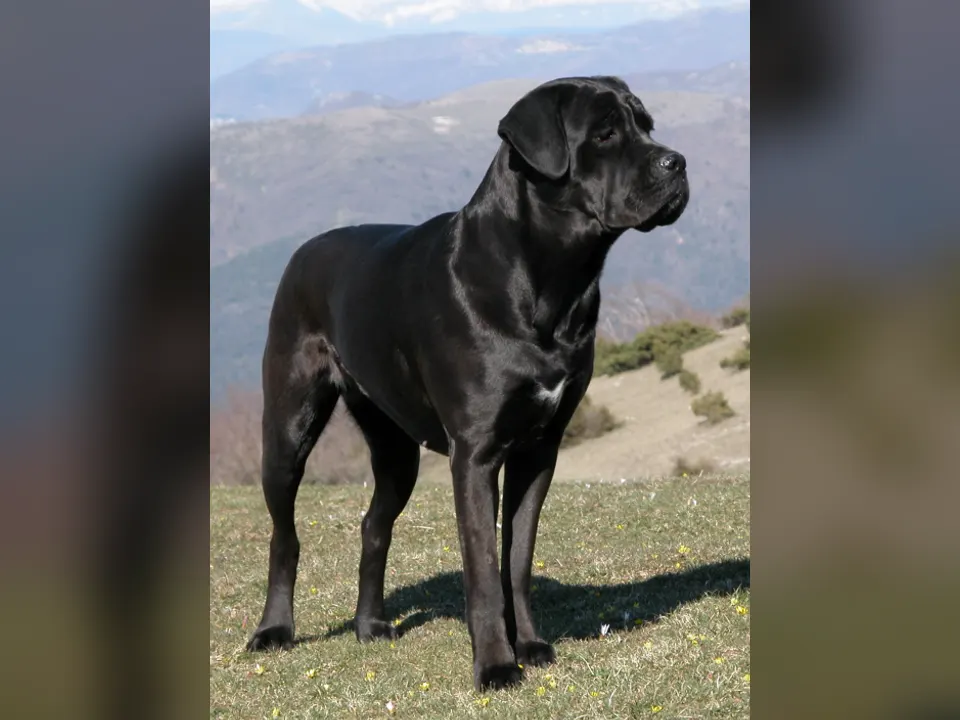
Field marks
These four marks are the ones the game gives you as clues. They paraphrase or briefly quote the AKC Cane Corso standard.
- “Medium-large size Molossus,” athletic, with a square-looking skull
- Muzzle “very broad and deep,” about one-third of the head’s length
- Ears cropped to an equilateral triangle, or natural and held tight to the cheeks
- Black, gray, fawn, or red, with brindling allowed; never tan-pointed
Tell them apart
Cane Corso or Rottweiler?
Check the color. A Rottweiler is always black with rust markings. A Cane Corso is black, gray, fawn or red, sometimes brindled, and never has tan points. The Corso’s muzzle is also very broad and deep, and its ears are often cropped to a triangle.
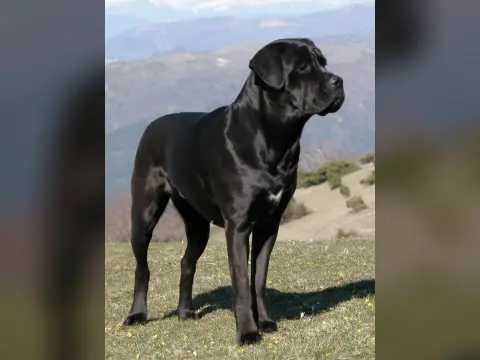
Cane Corso
- “Medium-large size Molossus,” athletic, with a square-looking skull
- Muzzle “very broad and deep,” about one-third of the head’s length
- Ears cropped to an equilateral triangle, or natural and held tight to the cheeks
- Black, gray, fawn, or red, with brindling allowed; never tan-pointed
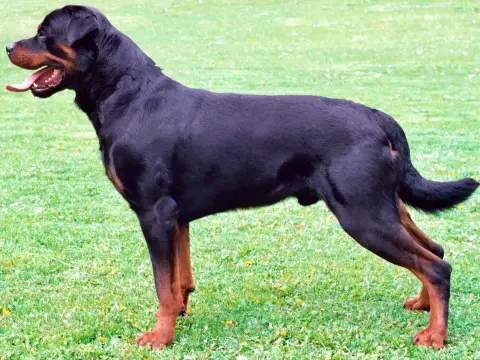
- “Always black with rust to mahogany markings”
- Rust spot over each eye, rust on cheeks, a strip on each side of the muzzle, and triangles on the chest
- Pendant, triangular ears and a broad head
- Docked tail (“one or two tail vertebrae”) or natural
Cane Corso or Boxer?
Check the muzzle and the color. A Boxer’s muzzle is short and blunt, about a third of the head, under a black mask, and the coat is fawn or brindle only, often with white. A Cane Corso is bigger and heavier, and comes in black, gray, fawn or red as well as brindle.
Cane Corso
- “Medium-large size Molossus,” athletic, with a square-looking skull
- Muzzle “very broad and deep,” about one-third of the head’s length
- Ears cropped to an equilateral triangle, or natural and held tight to the cheeks
- Black, gray, fawn, or red, with brindling allowed; never tan-pointed
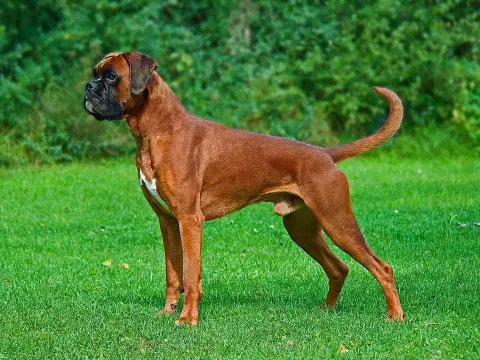
- “Broad, blunt muzzle” only ⅓ the length of the head, which the standard calls “the distinctive feature”
- Black mask on the muzzle; white may “replace part of” it and run up between the eyes
- Fawn or brindle only, with white markings covering no more than a third of the coat
- “Short, shiny” coat “lying smooth and tight”; square build, tail set high and carried up (docked for the show ring)
Cane Corso or Great Dane?
Check the height and the head. A Great Dane is giant and leggy, at least 28 to 30 inches, with a long, flat-planed head. A Cane Corso is medium-large and heavier through the head, with a very broad, deep muzzle. Harlequin and mantle patterns mean a Dane.
Cane Corso
- “Medium-large size Molossus,” athletic, with a square-looking skull
- Muzzle “very broad and deep,” about one-third of the head’s length
- Ears cropped to an equilateral triangle, or natural and held tight to the cheeks
- Black, gray, fawn, or red, with brindling allowed; never tan-pointed
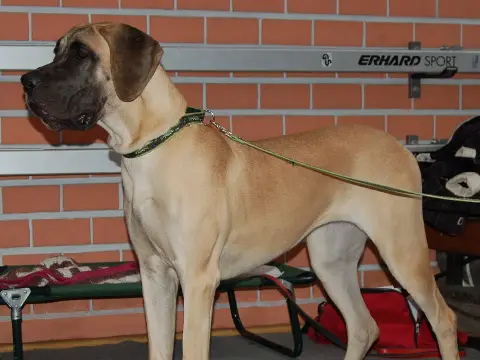
- Giant size: males at least 30 inches at the shoulder, females at least 28
- Long, “angular” head with the planes of the skull and muzzle “straight and parallel”
- Seven colors, including fawn and brindle with a black mask, harlequin (white with “black torn patches”) and mantle
- Ears “folded forward close to the cheek” or cropped erect; long tail that falls straight at rest and is never docked
Test your eye
One photo, four names, ten dogs a day. Free, no sign-up.
More Working & Herding breeds
- Akita
- Alaskan Malamute
- Australian Shepherd
- Belgian Malinois
- Bernese Mountain Dog
- Border Collie
- Boxer
- Cardigan Welsh Corgi
- Collie
- Doberman Pinscher
- German Shepherd Dog
- Great Dane
- Great Pyrenees
- Newfoundland
- Pembroke Welsh Corgi
- Rottweiler
- Saint Bernard
- Samoyed
- Shetland Sheepdog
- Siberian Husky